What is a 3-Section Force Hinge? The Ultimate Guide to Modern Cabinet Hardware
Discover why 3-section force hinges are the best choice for high-end cabinets. Learn about zero-rebound technology, free-stop angles, and how they protect your furniture.
When upgrading your kitchen or wardrobe, the choice of hinges defines the user experience. While traditional hinges often suffer from "rebound" or "bouncing," the 3-Section Force Hinge (also known as the Triple-Stage Force Hinge) has emerged as the gold standard for high-end custom cabinetry.
1. What is a 3-Section Force Hinge?
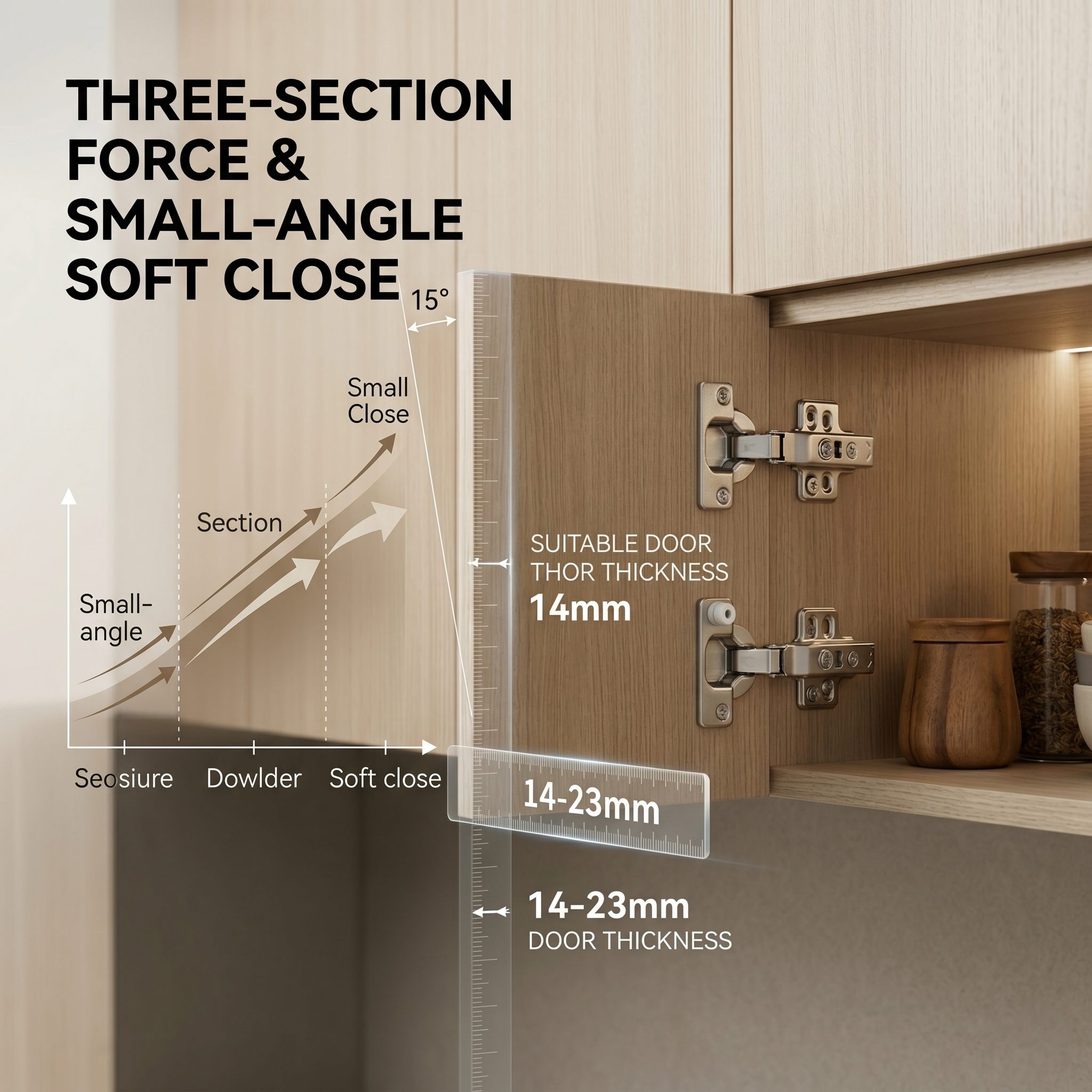
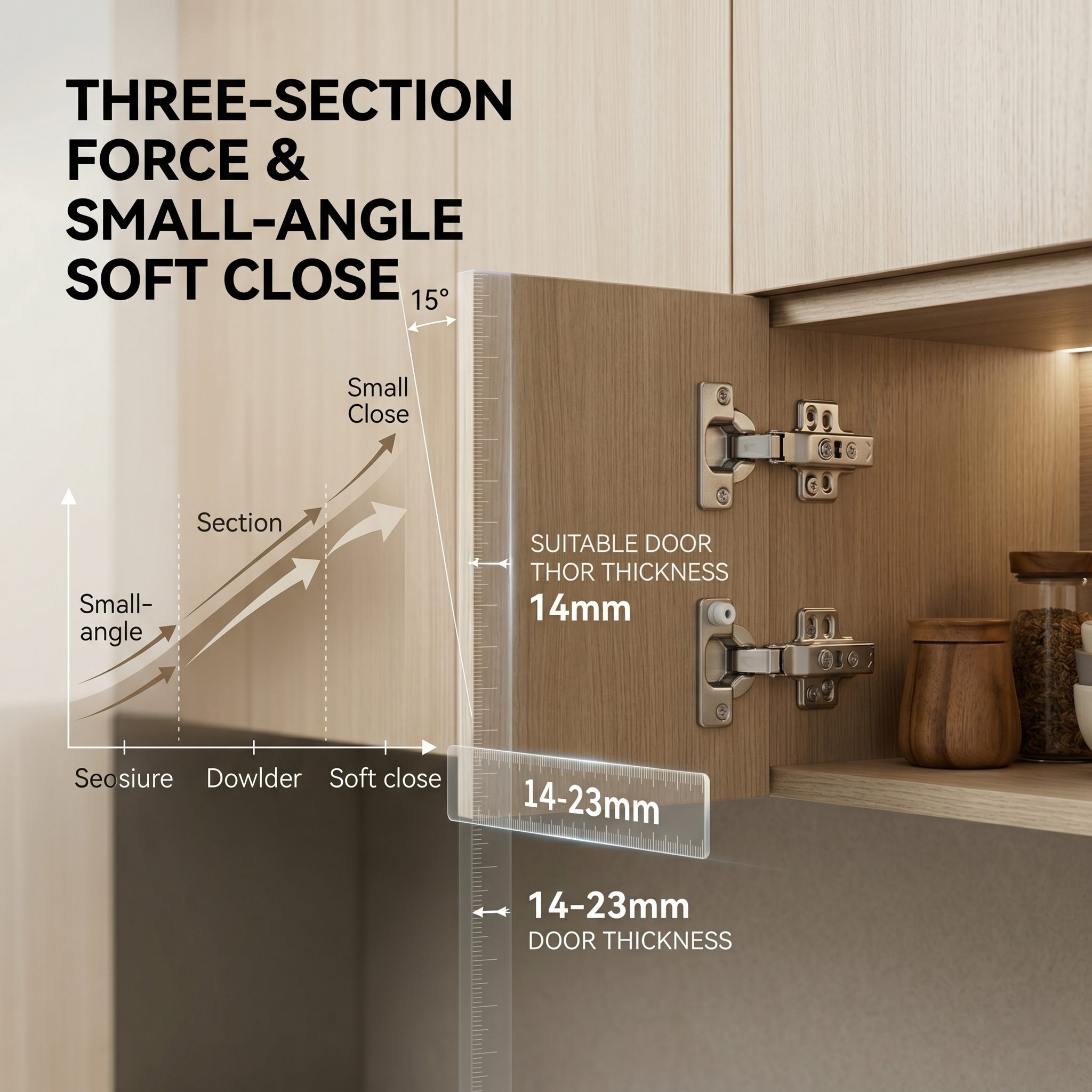
A 3-section force hinge is a precision-engineered furniture component designed to provide a "Zero Rebound" opening experience. Unlike standard hinges, it uses multi-stage springs and mechanical linkages to control the door’s movement across three distinct phases.
The Three Stages of Opening:
Stage 1: Manual Start: Requires a light initial pull to begin the opening process, similar to traditional hinges.
Stage 2: Free Stop (60°–80°): The hinge reaches a dynamic balance with the door’s gravity. The door can stay open at any angle within this range—perfect for quick access.
Stage 3: Automatic Soft Opening (80°+): Once the door passes 80°, it utilizes inertia and a specialized damping device to glide slowly and smoothly to its maximum angle (98° or 105°) without bouncing back.
2. Key Advantages: Why Choose 3-Section Force Hinges?
Zero Rebound & No Wobbling
Standard "1-section" hinges often hit the maximum angle and bounce back or wobble. "2-section" hinges often suffer from a "kick-back" effect where the door tries to close itself if not fully opened. The 3-section design eliminates these issues entirely, ensuring the door stays exactly where you want it.
Enhanced Furniture Longevity
By absorbing the kinetic energy during the opening phase, these hinges reduce the impact on cabinet side panels and screws. This prevents the "loose screw" syndrome and significantly extends the life of your cabinetry.
Superior Installation Efficiency
For installers, 3-section force hinges are a dream. They lock firmly in the open position, making it much easier to clip the hinge onto the mounting plate compared to the "floppy" nature of 2-section hinges.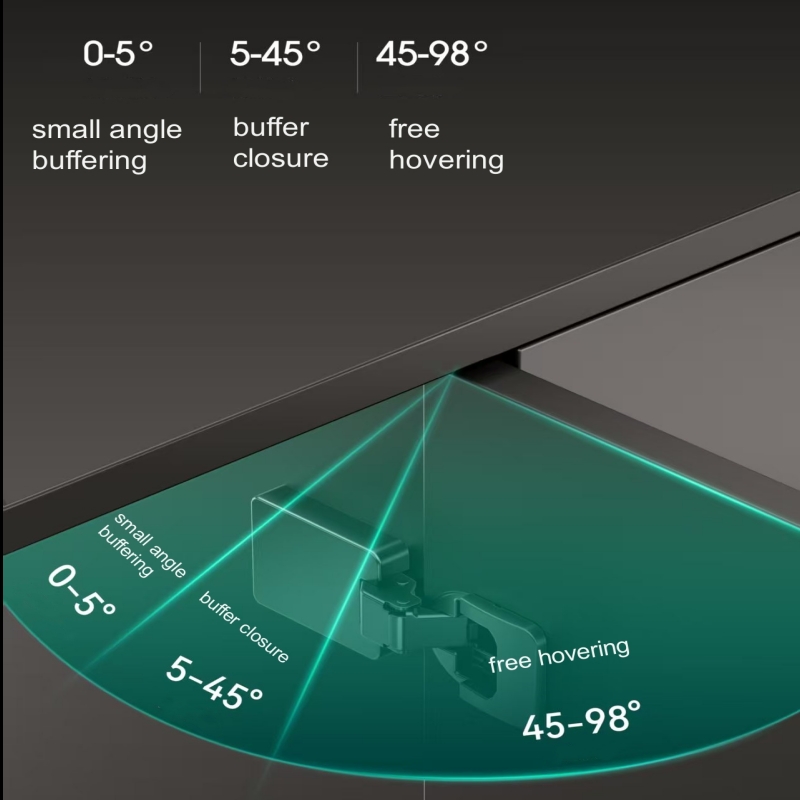
3. Common Misconceptions: Opening Force vs. Closing Damping
It is a common SEO mistake to confuse "Section Force" with "Soft Close Damping."
Opening Force (3-Section): Refers to how the door behaves when you open it (staying still and opening smoothly).
Damping (Soft Close): Refers to the hydraulic mechanism that slows the door down when you close it.
A high-quality 3-section hinge usually includes a hydraulic cylinder for soft-closing, but the "3-section" benefits remain even if the closing damper is removed. Don't be misled by vendors labeling 3-way adjustment as "3-section force."
4. Ideal Applications
These hinges are best suited for:
High-End Custom Cabinetry: Kitchens, wardrobes, and bathroom vanities.
Upper Wall Cabinets: Where safety and "stay-put" functionality are crucial to avoid head injuries.
Quiet Environments: Perfect for bedrooms or high-end offices where "silent luxury" is expected.
5. Summary: Pros and Cons
| Feature | 3-Section Force Hinge |
| Pros | Smooth operation, zero rebound, "Free Stop" functionality, easy installation, protects cabinet wood. |
| Cons | More complex internal structure, higher manufacturing cost, premium price point. |
Conclusion
The 3-section force hinge represents the pinnacle of modern hinge technology. By prioritizing user safety and cabinet durability, it provides a "smart" feel to manual furniture. If you are aiming for a premium, durable, and frustration-free home, investing in 3-section force hardware is a must.